
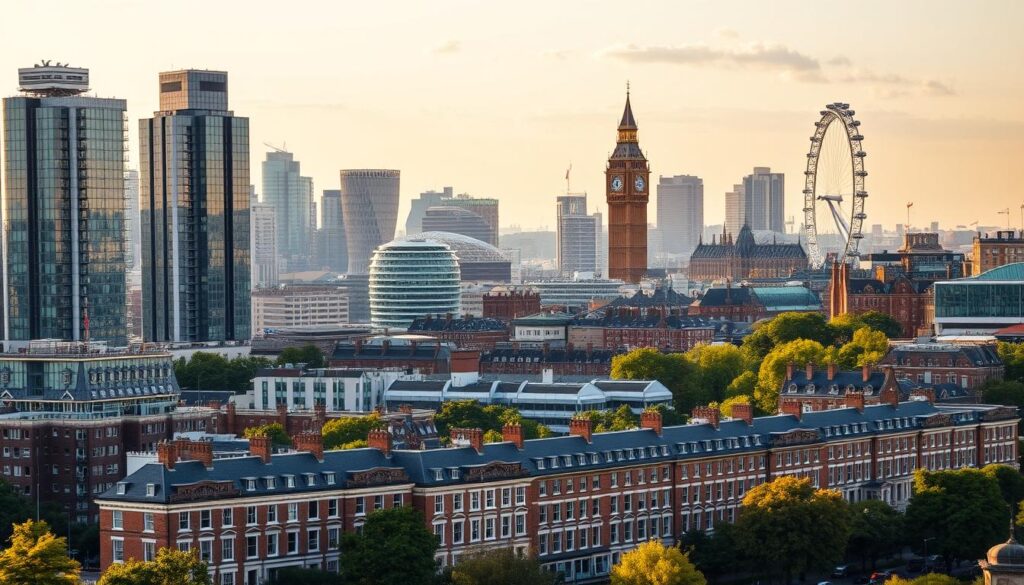
The London real estate market is set for big changes in 2025. These changes come from new trends and forecasts. It’s key for investors and homeowners to understand these shifts.
What to Expect from the London Real Estate Market in 2025: Trends & amp; Forecasts
Real estate forecasts suggest a rise in demand for green and tech-savvy homes. This change could affect property prices and where people invest in London.
Looking to 2025, we must think about what will shape the London real estate market. This includes the economy and what people want.
Key Takeaways
- London’s real estate market is expected to experience significant changes in 2025.
- Demand for sustainable properties is on the rise.
- Technological advancements will play a critical role in shaping the market.
- Economic indicators will influence property prices and investment opportunities.
- Understanding these trends is vital for making informed decisions.
The Current State of London’s Property Market
In 2024, London’s real estate market is slowly getting back on track. Experts say it’s due to the economy and how people are changing their buying habits.
Key Market Indicators in 2024
The market shows a mix of signs. Price trends are up and down, with some places going up and others going down.
Price Trends and Transaction Volumes
More people are buying and selling, showing they’re feeling more confident. The average home price in London has gone up a bit, with some areas seeing bigger increases.
Supply and Demand Dynamics
The balance between what’s available and what people want is key. There’s a big demand for luxury properties. But finding affordable homes is harder.

London property market trends
Post-Pandemic Recovery Analysis
The recovery after the pandemic has been different for each area. The commercial market has changed a lot, with offices needing to adapt to new work styles.
Sector-by-Sector Performance
- The residential market has been strong, with prices staying steady in many places.
- The commercial market is changing, focusing on flexible and hybrid workspaces.
- The industrial and logistics sector is growing, thanks to online shopping.
As London’s property market keeps changing, it’s important to understand these trends. This knowledge is key for both investors and those looking to buy a home.
What to Expect from the London Real Estate Market in 2025: Trends & Forecasts
The London real estate market in 2025 is set for big changes. These changes come from the economy and people’s needs. Knowing the trends and forecasts is key for investors, buyers, and sellers.
Short-Term Price Projections
In the short term, London’s property prices will change. This is due to interest rates and the economy’s stability. A closer look at each quarter gives us a better idea of what to expect.
Quarter-by-Quarter Forecast
Prices are expected to slowly go up in 2025. There will be a big jump in the third quarter.
| Quarter | Projected Price Change |
| Q1 2025 | +1.5% |
| Q2 2025 | +2.0% |
| Q3 2025 | +3.0% |
| Q4 2025 | +2.5% |
Long-Term Market Stability Factors
Long-term stability in the London real estate market depends on the economy. This includes GDP growth and job rates.
Economic Indicators to Monitor
Key indicators to watch are inflation rates, interest rates, and government policies. These affect the property market a lot.
Residential Property Outlook for 2025
The future of London’s residential property market in 2025 looks promising but also comes with challenges. Many factors will shape its path.
Single-Family Homes Forecast
The single-family homes market is set to grow at a steady pace. This is because people want more space to live. Outer London areas will see more of this trend because they offer more room.
Apartment and Condominium Market Trends
The apartment and condominium market in London is expected to stay strong. This is true, mainly in the city center. The appeal of city living is drawing in both buyers and renters.
Rental Market Projections
The rental market in London is forecasted to see a small increase in demand. This is due to a growing population and London’s status as a global center. Rental returns will be affected by interest rates and the economy.
Buy-to-Let Investment Performance
Investments in London’s buy-to-let market are expected to perform well. Some areas will offer better returns than others. Investors should think about location, property type, and market conditions carefully.
| Area | Rental Yield | Capital Growth |
| Central London | 4-5% | 3-4% |
| Outer London | 5-6% | 4-5% |
Luxury Property Segment Analysis
The luxury property market in London is expected to stay strong. International buyers will keep driving demand for high-end homes. Prime areas will see a lot of investment.
Commercial Real Estate Transformation
The future of London’s commercial real estate is changing fast. This change is due to new needs for office, retail, and industrial spaces. By 2025, the sector will be very different because of new tech, work habits, and how people shop.
Office Space Demand Post-Remote Work Era
Remote work has changed how we need office space. Companies are now looking for offices that are flexible and good for teamwork. This has led to:
- More people want flexible, short-term leases
- Co-working spaces are becoming more popular
- Offices are being redesigned for better teamwork
Retail Property Challenges and Opportunities
The retail world is facing big challenges because of online shopping. But, there are chances for:
- Turning old retail spaces into places for experiences
- Investing in online and in-store shopping together
- Creating retail spots that are fun and bring people together
Industrial and Logistics Sector Growth
The industrial and logistics sector is growing a lot because of online shopping. Key trends include:
- More need for big, modern warehouses
- Investing in tech to make logistics better
Last-Mile Delivery Facilities Demand
The growth of logistics also means more need for last-mile delivery places. These places are key for:
- Shorter delivery times and lower costs
- Happy customers with faster delivery
- Places near cities to make delivery faster
As London’s commercial real estate market keeps changing, knowing these trends is key. Investors, developers, and businesses need to understand these changes.
Neighborhood Hotspots: Areas Poised for Growth
London’s real estate is changing fast. Some areas are becoming hotspots for investment and growth in 2025. It’s important for investors and homebuyers to know where these areas are.
Emerging Neighborhoods with Investment Opportunity
Several London neighborhoods are catching the eye for their growth and investment returns. East London is a big player in this development.
Established Areas Maintaining Value
While new areas offer growth, old favorites keep their value. Prime Central London is a top spot for luxury homes and business investments.
Regeneration Zones to Watch
Regeneration zones get a lot of investment for better infrastructure and amenities. Infrastructure-driven growth areas are worth watching.
Infrastructure-Driven Growth Areas
Places near big transport projects like HS2 and Crossrail will see big benefits. They’ll get better connections, making them great for homes and businesses.
Knowing about these hotspots is key to understanding London’s real estate in 2025. Whether you’re investing or buying a home, staying informed is vital.
Economic Factors Influencing London’s Property Market
As we look towards 2025, it’s key to understand the economic factors shaping London’s property market. The market reacts to many economic signs. These signs can greatly change property prices and how much people want to buy.
Interest Rate Projections and Their Impact
The interest rate situation is very important for the property market. Experts think interest rates might stay the same in 2025. This could make people more confident in buying homes.
Lower interest rates mean cheaper mortgages. This can lead to more people wanting to buy homes.
Inflation Considerations for Real Estate
Inflation is a big factor in the real estate market. High inflation can cause construction costs to rise. This can make property prices go up too.
But real estate can protect against inflation. Property values and rental income often grow with inflation.
Employment Trends Affecting Housing Demand
Employment trends are very important for housing demand. London’s economy is varied, with big sectors like finance, tech, and healthcare.
Sector-Specific Employment Growth
Jobs in tech and healthcare are growing. This will increase the need for homes near where people work. As these sectors grow, so will the demand for homes and commercial spaces.
Regulatory Changes Shaping the 2025 Market
London’s real estate market is set for big changes in 2025. These shifts will impact many areas, like housing policies and taxes for investors.
Expected Policy Shifts in Housing
The UK government plans to introduce new housing policies. These aim to make homes more affordable and tackle the shortage. Some possible changes include:
- Incentives for developers to build more affordable housing
- Stricter rules on short-term rentals
- Reforms to the planning permission process
Tax Implications for Property Investors
Tax policies for property investors are likely to change. Stamp duty surcharges for non-resident buyers might be adjusted. This could make London properties less appealing to foreign investors.
Non-Resident Buyer Considerations
Non-resident buyers need to watch out for changes in capital gains tax and other rules. These could influence their investment choices.
Building Regulations and Planning Changes
New building rules will focus on sustainability and energy efficiency. Developers will have to meet stricter environmental standards. This might raise construction costs but also boost property values.
These changes will significantly impact the London real estate market in 2025. They offer both challenges and opportunities for investors, developers, and homeowners.
Technology Disruption in London Real Estate
Technology is changing how we buy, sell, and manage properties in London. New tech is reshaping the market. It’s a big change.
PropTech Innovations Changing the Market
PropTech is leading this change. It brings new ways to manage and sell properties. Think AI for valuing homes and blockchain for secure deals.
Digital Transformation of Property Transactions
Buying and selling homes is now easier and safer thanks to digital tools. Online platforms cut out the middlemen. It’s all about making things smoother.
Smart Home Technology Demand
People want smart homes for more convenience, security, and to save energy. Smart features are now a big draw for new homes.
IoT Integration in New Developments
IoT is making homes smarter. Features like smart thermostats and security cameras are becoming standard. It’s all about making life better.
Sustainability and Green Building Trends
The London real estate market is undergoing rapid change. It’s moving towards sustainability and green building. This change is because of growing environmental awareness, strict rules, and the financial gains of sustainable properties.
Environmental Regulations Impact on Development
London is getting stricter on its carbon footprint. Developers must follow new, green building codes. These codes focus on saving energy and using sustainable methods.
Green Building Premium Analysis
Green buildings cost more upfront but offer long-term gains. Research shows they get higher rents and sale prices.
Return on Investment for Sustainable Features
Features like solar panels and energy-saving HVAC systems cut costs. They also boost property value.
Energy Efficiency Requirements
Energy efficiency is key in building today. New buildings must meet strict energy standards.
Net Zero Carbon Building Standards
There’s a big push for net-zero carbon buildings. Developers are using new materials and methods to meet this goal.
| Feature | Benefit | Impact |
| Energy-efficient systems | Reduced operational costs | High |
| Sustainable materials | Lower environmental impact | Medium |
| Green certifications | Increased property value | High |
As sustainability shapes London’s real estate, investors and developers need to keep up. Embracing green building not only helps the planet but also brings financial rewards.
Foreign Investment Landscape in 2025
Foreign investment in London’s real estate is expected to stay strong in 2025. This is due to global economic trends and London’s appeal to international buyers. The city’s stability and cultural and financial importance attract investors worldwide.
International Buyer Trends and Hotspots
International buyers prefer prime locations in London. They look for areas with high rental yields and growth opportunities. Kensington, Chelsea, and Mayfair are favorites among the wealthy.
Currency Fluctuation Effects on Investment
Currency changes can greatly affect London’s real estate appeal to foreign investors. A weaker pound can make properties more affordable. This might increase demand.
Comparative Appeal Against Global Alternatives
London competes with cities like New York, Paris, and Singapore for foreign investment. Its history, culture, and financial opportunities make it appealing. But, it must offer competitive returns and security.
American Investor Opportunities in London
American investors find London’s property market attractive due to its stability and high returns. The city’s global status and English language make it easy to invest.
Tax Considerations for US Buyers
US buyers need to think about taxes when investing in London real estate. They face withholding taxes on rental income and capital gains tax on sale. Getting professional advice is key to understanding these taxes.
Investment Strategies for Dollar-Based Investors
Dollar-based investors should use hedging strategies to reduce currency risk. Investing in properties with strong rental yields can also help manage currency risks.
Long-Term Brexit Implications for Real Estate
Brexit’s effects on London’s real estate go beyond today’s worries. It shapes long-term market trends. The financial services sector, a big part of London’s economy, is changing a lot.
Financial Services Sector Impact on Property
The financial services sector has always pushed up demand for top properties in London. After Brexit, this demand might change, possibly altering luxury property prices. How well the sector adapts to new rules is key.
Trade Agreement Effects on Market Stability
Trade deals after Brexit will be vital for London’s real estate market. Good trade terms could boost investor confidence. But bad deals might scare off investors.
Immigration Policy Influence on Housing Demand
Immigration policies will greatly affect housing demand in London. Changes in visa rules, like the skilled worker visa, will shape rental markets.
Skilled Worker Visa Impact on Rental Markets
The skilled worker visa will draw in global talent, possibly boosting rental demand. This could make rental markets more lively in areas favored by professionals.
Conclusion: Navigating London’s Real Estate Future
Looking ahead to 2025, London’s real estate market is set for big changes. These changes come from the economy, new rules, and tech advancements. It’s key to know these trends to understand London’s real estate future.
The home market will grow differently in various areas. Single-family homes and luxury properties might do better than others. The commercial market will also change, focusing on flexible offices and new retail ideas.
To succeed in London’s real estate, you need to keep up with new areas, rules, and Brexit’s effects. Investors and buyers must think about these to make smart choices.
By looking at the trends and forecasts mentioned earlier, people can prepare for success in London’s real estate. As the market keeps changing, knowing what drives it is vital for its future.
FAQ
What are the key trends expected to shape the London real estate market in 2025?
In 2025, London’s real estate market will see big changes. Sustainability and green building will be key. Technology will also play a big role, changing how we buy and sell property. Changes in foreign investment and economic factors like interest rates will also shape the market. These factors will impact housing demand and stability.
How will Brexit continue to impact London’s property market in 2025?
Brexit will keep affecting London’s real estate market. It will impact the financial sector, trade, and immigration. These changes can affect housing demand and market stability.
What can we expect from the residential property market in London in 2025?
The residential market will see different trends in 2025. Single-family homes, apartments, and luxury properties will all have their own paths. Rental markets and buy-to-let investments will be influenced by employment and regulations.
How will technology disrupt the London real estate market in 2025?
Technology will keep changing the market in 2025. PropTech and digital transactions will be big. Smart homes and IoT will also be in demand.
What are the opportunities for foreign investors in London’s real estate market in 2025?
Foreign investors, including Americans, will find opportunities in London. Currency changes, global appeal, and taxes will influence their choices.
How will sustainability and green building trends affect the London real estate market in 2025?
Sustainability and green building will be big in 2025. Environmental rules, green premiums, and net-zero carbon goals will drive this trend.
What are the emerging neighborhoods with investment opportunities in London?
East London’s emerging neighborhoods offer great investment chances. Prime Central London will also keep its value. Development and regeneration will drive these opportunities.
How will commercial real estate transform in London in 2025?
Commercial real estate will change a lot in 2025. Office space demand, retail challenges, and industrial growth will shape the market. Last-mile delivery facilities will be a big driver.
What economic factors will influence London’s property market in 2025?
Economic factors like interest rates, inflation, and employment will affect the market. These factors will impact demand and stability.
What regulatory changes can be expected to shape the London real estate market in 2025?
Regulatory changes will be key in 2025. Policy shifts, tax implications, and building regulations will shape the market. These changes will influence investment and development.





Leave a Reply