
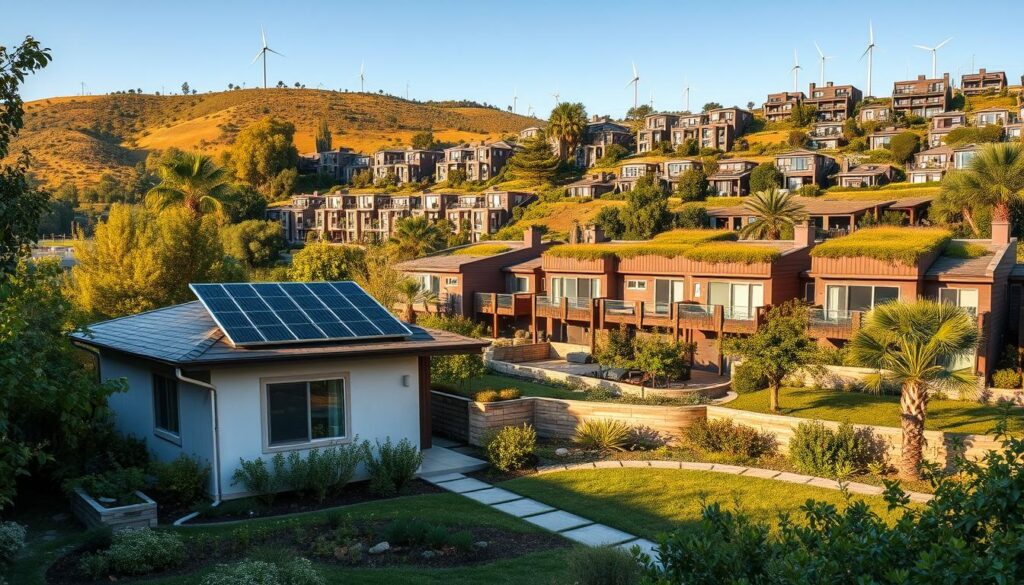
Eco-friendly living is gaining popularity in the US and UK. This is pushing green real estate trends forward. Homeowners want sustainable homes that cut down on carbon emissions and offer a healthier place to live.
The Rise of Sustainable Homes: Green Real Estate Trends in the US & UK
More people are looking for energy-efficient homes. They want properties with green materials, solar panels, and appliances that save energy. This move towards green living is changing the real estate scene. Now, eco-friendly features are key when selling a home.
Key Takeaways
- Increasing demand for sustainable homes in the US and UK
- Green real estate trends driven by eco-friendly living
- Energy-efficient homes are becoming a major selling point
- Sustainable features transforming the real estate market
- Eco-friendly building materials and solar panels are in high demand
The Evolution of Sustainable Housing
Sustainable housing has changed a lot over time. It started as a small idea, but now it’s a big movement. This change is because of growing worries about the environment and new technologies.
Historical Context of Green Building
The idea of green building began in the 1960s and 1970s. Back then, people started to care more about the environment. They wanted to use less energy and harm the planet less.
In the 1990s, green buildings got more popular. This was thanks to new standards and certifications for green buildings.
From Niche to Mainstream Movement
As worries about climate change and using up resources grew, sustainable housing became more popular. Governments and people started asking for buildings that were better for the environment. This led to more innovation and investment in green technologies.
Key Milestones in Sustainable Architecture
| Year | Milestone | Description |
| 1990 | Introduction of LEED | Launch of Leadership in Energy and Environmental Design (LEED) certification in the US. |
| 2000 | Green Building Councils | Establishment of Green Building Councils worldwide to promote sustainable building practices. |
| 2010 | Net-Zero Energy Homes | Increased focus on net-zero energy homes, capable of producing as much energy as they consume. |

sustainable housing evolution
Defining Sustainable Homes in a Modern Context
Sustainable homes today have many features and technologies to lessen environmental harm. They are built to use less energy, rely on renewable sources, and cut down on waste.
Key Elements of Green Residential Properties
Green homes have several key parts that make them eco-friendly. These include:
- Energy-saving appliances and lights
- Systems like solar and wind power
- Materials that are good for the planet
- Ways to save water
- Insulation and climate control that work well
Sustainability Standards and Certifications
Standards and certifications are key in showing a home is green. LEED and BREEAM are well-known for this. They help homes meet high environmental standards.
| Certification | Description | Region |
| LEED | Leadership in Energy and Environmental Design | US and International |
| BREEAM | Building Research Establishment Environmental Assessment Method | UK |
The Difference Between “Green,” “Eco-Friendly,” and “Sustainable”
“Green,” “eco-friendly,” and “sustainable” mean different things. “Green” means products or actions that help the environment. “Eco-friendly” products aim to have less impact on nature. “Sustainable” means we can use resources now without harming future generations.
“Sustainability is not just about being green; it’s about creating a better future for all.”
Unknown
Current Market Overview: The Rise of Sustainable Homes: Green Real Estate Trends in the US & UK
Green real estate trends are changing the housing market in the US and UK. More people want homes that are good for the environment and save energy.
Market Size and Growth Projections
The market for green homes is growing fast. Reports say the global green building market will hit $1.1 trillion by 2027. The US and UK will play big roles in this growth.
| Region | 2023 Market Size | 2027 Projections |
| US | $200 billion | $350 billion |
| UK | $50 billion | $100 billion |
Consumer Demand Patterns
More people want homes that are good for the planet. This is because of environmental worries, government help, and the money saved by living in energy-efficient homes.
Price Premiums for Sustainable Properties
Green homes usually cost more than regular ones. Research shows they can sell for up to 10% more.
The move towards green housing will keep growing. It’s driven by people’s needs, new tech, and government support. We’ll see more creative and eco-friendly homes as the market changes.
Regulatory Frameworks Driving Green Real Estate
In the US and UK, green real estate is moving forward thanks to rules and incentives. These rules are key to making housing more sustainable.
US Federal and State Regulations
The US has seen big changes in rules supporting green buildings. Federal tax incentives help developers choose sustainable methods. For example, the Energy Policy Act of 2005 and other laws offer tax breaks for energy-efficient buildings.
UK Building Regulations and Green Initiatives
The UK has strict building rules to cut carbon emissions. The Building Regulations 2010 and updates set energy efficiency standards. Also, the Code for Sustainable Homes pushes for better environmental design in homes.
Compliance Challenges for Developers
Developers face big hurdles in following these rules. The rules’ complexity and compliance costs are major worries. The table below shows the costs of following these rules.
| Regulatory Aspect | US | UK |
| Energy Efficiency Standards | Guided by ASHRAE standards | Building Regulations 2010 |
| Compliance Costs | Green financing options are available | Average 5-7% of the total construction cost |
| Incentives | Federal tax credits available | Green financing options available |
Developers need to know these rules to succeed in green real estate. As rules change, staying up-to-date is key to success.
Leading Green Building Technologies
Real estate is embracing sustainable practices thanks to new green building technologies. These innovations cut down on environmental harm and make buildings more efficient and comfortable.
Energy-Efficient Building Materials
Energy-efficient building materials are a big part of green building. Recycled insulation, low-E windows, and sustainable wood cut down energy use. They keep buildings warm or cool without needing as much heating or cooling.
Smart Home Integration for Sustainability
Smart home tech is key to making homes more sustainable. Smart thermostats, energy monitors, and automated lights help us use energy better. They give homeowners data to make smart energy choices.
Water Conservation Systems
Green building tech also focuses on saving water. Low-flow fixtures, rainwater harvesting, and greywater recycling cut down water waste. These systems save water and ease the load on water supplies.
Waste Reduction Strategies
A green building also means reducing waste. This includes:
- Recycling programs during construction
- Using materials with recycled content
- Less packaging waste
Renewable Energy Integration in Residential Properties
Residential properties are now key players in using renewable energy. This move is to cut down on carbon emissions and fossil fuel use.
Solar Power Solutions
Solar power is a big hit in homes. People are putting up solar panels to use the sun’s energy. This cuts down their electricity bills and carbon footprint.
A typical solar panel system can save homeowners $400 to $1,000 a year on energy costs.
Wind and Geothermal Options
Wind and geothermal energy are also good for homes. Wind turbines work well in windy areas, but they need space and can be noisy. Geothermal systems use the earth’s heat for heating and cooling, but they cost more upfront.
Energy Storage Innovations
Energy storage systems, like batteries, are key to using renewable energy well. They store extra energy for when it’s needed. Tesla’s Powerwall is a great example, letting homeowners use solar energy later.
Net-Zero Energy Homes
The goal is to make homes that use no more energy than they produce. This is done with energy-saving design, renewable energy, and storage. Net-zero homes are good for the planet and save money in the long run.
| Renewable Energy Source | Benefits | Challenges |
| Solar Power | Accessible, reduces electricity bills | Intermittent energy source |
| Wind Energy | Effective in windy areas | Space and noise considerations |
| Geothermal Energy | Efficient heating and cooling | High upfront costs |
The U.S. Department of Energy says net-zero homes are key to cutting energy use and emissions. This shows how important it is to use renewable energy in homes.
Comparative Analysis: US vs UK Green Building Practices
Green building in the US and UK aims for the same goals but vary in how they’re done. Both focus on saving energy and being eco-friendly. Yet, their methods are influenced by local laws, weather, and what people want.
Cultural Differences in Sustainability Approaches
The US and UK see sustainability differently. The US values individual freedom, shown in single-family homes with solar panels. The UK, on the other hand, focuses on community, leading to district-level sustainability initiatives. For example, the UK is building eco-towns that are green and sustainable.
- The US leads in green buildings certified by LEED.
- The UK uses BREEAM for a broader sustainability approach.
Regional Adaptation Strategies
Adapting to local conditions is key to green building success. In the US, regions tackle their own climate issues. California homes use earthquake-resistant materials, while Florida homes are built to withstand hurricanes.
In the UK, builders choose insulation materials that fit the local weather.
“The key to successful green building is understanding the local context and adapting strategies.”
— Expert in Sustainable Architecture
Cross-Atlantic Knowledge Transfer
Sharing knowledge between the US and UK can speed up green building progress. Both can learn from each other’s wins and setbacks. For example, the US might adopt the UK’s BREEAM system, while the UK could use the US’s energy-efficient building materials.
This exchange could make building practices worldwide more effective and green.
Economic Implications of Sustainable Homes
Sustainable homes are good for the planet and your wallet. They offer big economic benefits. This is important for homeowners, investors, and those who make policies.
Cost-Benefit Analysis for Homeowners
At first, sustainable homes cost more. But the long-term gains are huge. Homeowners save on bills, see their property value go up, and might get tax breaks.
Property Value Trends for Green Homes
Green homes are getting more popular. This makes their value go up. Studies show homes with green certifications sell for more than others.
| Feature | Conventional Homes | Green Homes |
| Average Sale Price | $300,000 | $350,000 |
| Utility Bills | $200/month | $150/month |
Return on Investment Timelines
Operational Cost Savings
The main benefit of sustainable homes is saving money. Things like energy-efficient appliances and solar panels cut down bills. This gives a steady return over time.
Key savings include: less energy use, lower water bills, and lower maintenance costs.
Financing Green Real Estate Projects
Innovative financing is making sustainable development possible. The need for green real estate is rising. This has led to new financing options for these projects.
Green Mortgages and Specialized Loans
Green mortgages and loans are gaining traction. They offer better terms to support sustainable properties. For example, green mortgages can save homeowners money on energy upgrades.
- Lower interest rates for green projects
- Higher loan-to-value ratios for sustainable properties
- Incentives for energy-efficient upgrades
Government Incentives and Tax Benefits
Government incentives are key for green real estate. Tax credits, grants, and subsidies help offset costs. They encourage investment in sustainable projects.
Private Investment in Sustainable Development
Private investment is fueling green real estate growth. Impact investors and funds support projects with financial and environmental benefits.
Green mortgages, government incentives, and private investment are boosting green real estate. As the field grows, we’ll see more creative financing options.
Environmental and Social Impact
Sustainable homes have many benefits, like cutting down on carbon emissions and boosting public health. As the real estate world moves towards being greener, knowing these advantages is key.
Reducing Carbon Emissions
One big plus of sustainable homes is that they cut down on carbon emissions. This is done through energy-saving appliances, solar power, and better insulation.
Community Benefits
Green developments also bring community perks. They often have public green spaces, encourage walking, and lower the urban heat island effect. A study found that green buildings can cool cities by up to 2°C, as the U.S. Environmental Protection Agency notes.
“Sustainable development is not just about being green; it’s about creating thriving communities.”
— Jane Smith, Green Building Expert
Health and Well-being Advantages
Sustainable homes aim to improve air quality, reduce pollution, and increase natural light. These efforts help residents stay healthier and feel better. Here’s a comparison of green and traditional homes:
| Feature | Green Homes | Traditional Homes |
| Energy Efficiency | High | Low |
| Indoor Air Quality | Improved | Standard |
| Natural Lighting | Enhanced | Limited |
In summary, sustainable homes bring many benefits. They help the environment, improve community life, and enhance resident health.
Case Studies: Successful Sustainable Housing Developments
Successful sustainable housing projects in the US and UK show us the future of green homes. They show how design, technology, and practices can come together. This creates homes that are good for the planet and affordable.
Innovative US Projects
The US has many groundbreaking green housing projects. For example, Zero Energy Ready Homes aims to build homes that use as much energy as they make. The Via Verde in New York uses green roofs, solar panels, and efficient systems for sustainability.
Groundbreaking UK Developments
In the UK, BedZED is a leading eco-friendly housing project. It has energy-saving homes, renewable energy, and green transport. The One Central Park in London also stands out, with vertical gardens and a tri-generation plant for energy.
Lessons Learned from Leading Examples
These projects teach us important lessons for future green homes. First, using energy-efficient design and renewable energy is key. Second, choosing sustainable materials and building methods is vital. Experts say, “
Sustainable development is not just about technology; it’s also about people and their needs.
” These examples show that with smart planning and design, green homes can be both good for the planet and affordable.
Conclusion: The Future Landscape of Sustainable Real Estate
The future of sustainable real estate looks bright, thanks to growing demand for green homes and new green building tech. The US and UK are leading the way with their projects and rules. This sets a good example for other countries to follow.
Sustainable homes are now a big deal, not just a small trend. People want homes that are good for the planet and save energy. We’re seeing more homes use solar power, smart tech, and green materials.
As things keep changing, we’ll see even better ways to build green homes. New tech and what people want will drive these changes. Sustainable real estate is set to bring big wins for our planet, society, and economy.
FAQ
What is a sustainable home?
A sustainable home is built to be kind to the environment. It uses materials that save energy and renewable energy sources. It’s designed to have a small impact on the planet.
What are the benefits of sustainable homes?
Sustainable homes use less energy and cost less to run. They also improve the air inside and reduce carbon emissions. This makes them better for our health and the planet.
How do green building technologies contribute to sustainability?
Green building tech, like energy-saving materials and smart homes, helps a lot. They cut down on environmental harm. This makes buildings more eco-friendly and sustainable.
What is the difference between “green,” “eco-friendly,” and “sustainable”?
“Green” means products or actions that lessen harm to the environment. “Eco-friendly” means things that don’t harm the environment. “Sustainable” means meeting today’s needs without hurting tomorrow’s.
What are the key elements of green residential properties?
Green homes have energy-saving appliances and sustainable materials. They also use renewable energy and save water. These features reduce their environmental impact.
How do regulatory frameworks drive green real estate practices?
Rules and laws push for green buildings. They set standards for energy use and sustainability. They also offer incentives for following these rules.
What financing options are available for green real estate projects?
There are many ways to fund green homes. You can get green mortgages or special loans. There are also government incentives and tax breaks. Private investors also support sustainable projects.
What are the economic implications of investing in sustainable homes?
Green homes save money on energy and increase in value. They offer long-term benefits, making them a smart choice for buyers and investors.
How do sustainable homes impact property values?
Green homes are more valuable because they save energy and money. They also provide a healthier living space. This makes them more appealing to buyers and renters.
What are net-zero energy homes?
Net-zero homes produce as much energy as they use. They often use solar or wind power and are built to be very energy-efficient.




Leave a Reply